

The art of attracting attention: everything you need to know about exhibition stands .

An exhibition stand is your company’s business card at an event; it determines whether potential customers will walk by or queue up. It ‘s a three-dimensional sales tool.
1. Types of positioning: How will others perceive you?
The spatial organization depends on the number of sides of your space accessible to pedestrians.
- Coin: Open on both sides, it offers excellent visibility, more space and smoother traffic flow than a linear stand.
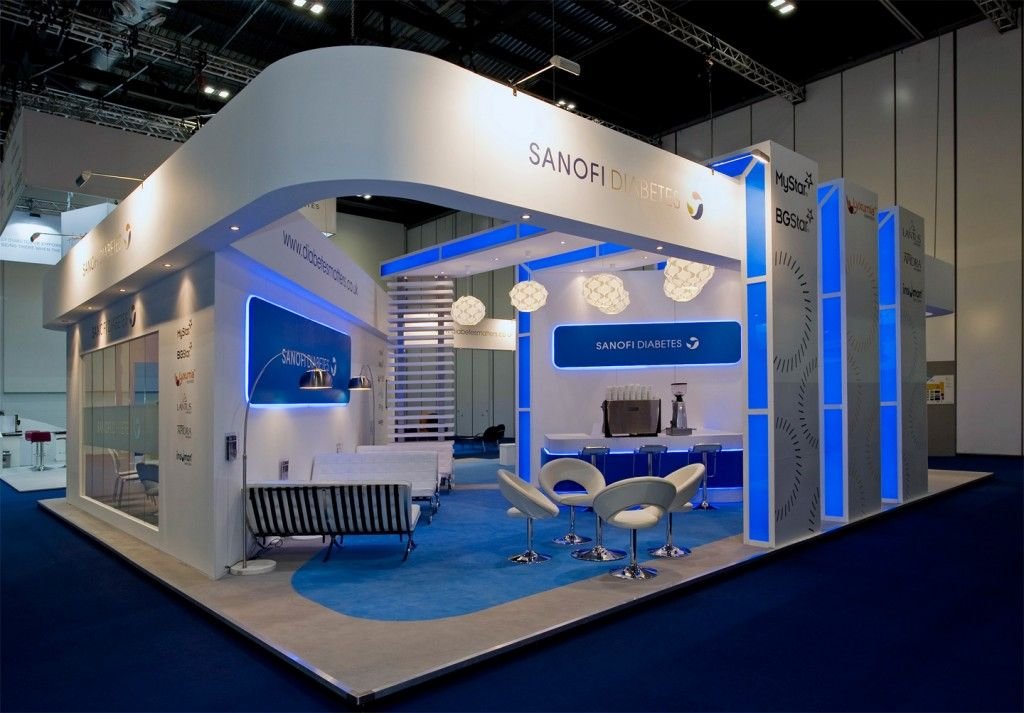
- Peninsula: The building is open on three sides, has a large surface area, a representative appearance and requires precise orientation so that visitors do not get lost.
- Island: The royal configuration, open on all four sides, allows for unique architectural solutions and a free division of space into zones.
2. Design: from mobile versions to exclusive designs.
- Standard et mobile (pliable) : Lightweight and easy-to-assemble structures, with or without a frame, that can be set up in an hour. Ideal for start-ups, regional trade shows, or low-budget projects.
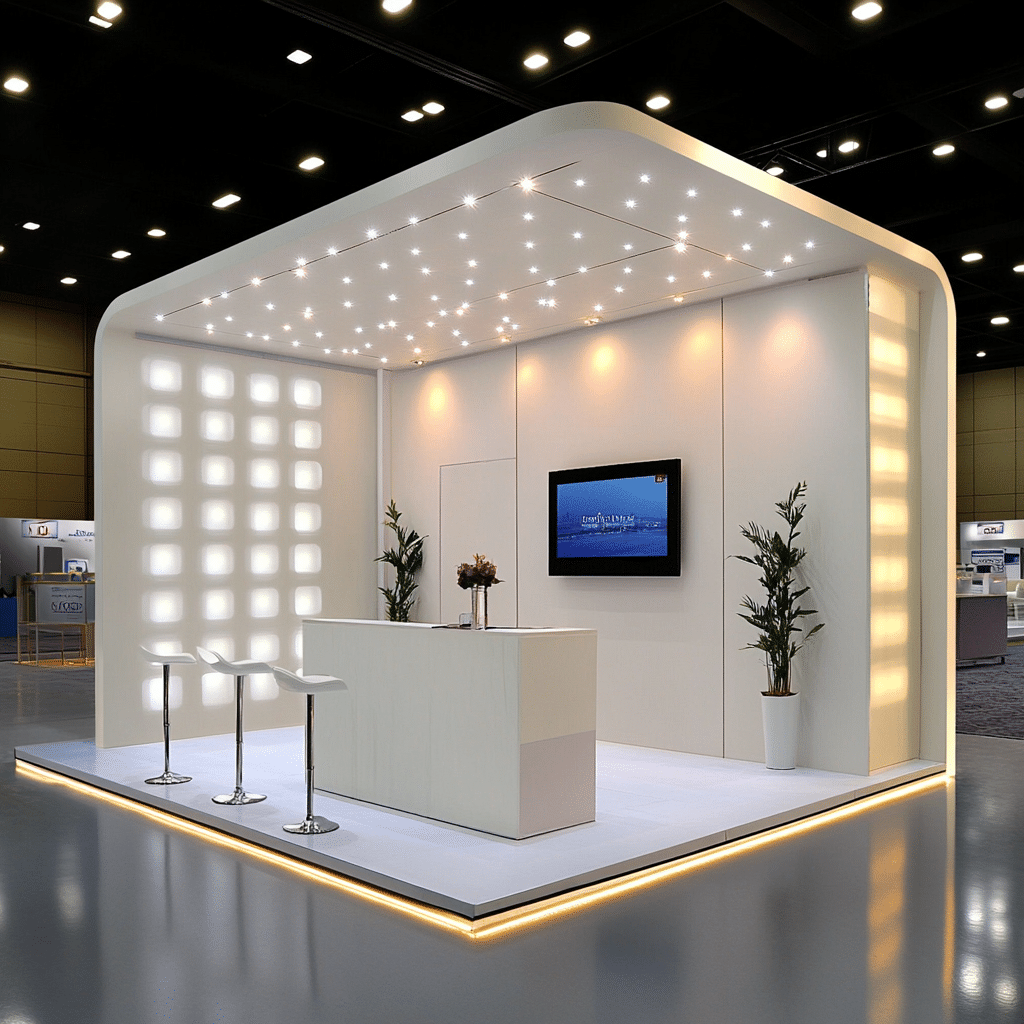
- Exclusive (individual): The unique combination of aluminum, MDF, glass, and acrylic, developed specifically for this brand, lends it undeniable prestige. It allows for the creation of original shapes, suspended elements, and a deep integration of light.
- Mixed: Based on an existing basic structure, enriched with unique and personalized brand details.
3. Golden Rules of Arranging
- The 3-second rule: A large logo and the main message of your offer (1 to 2 sentences) must be easily legible even from a distance. Small font placed at hip height will be illegible.
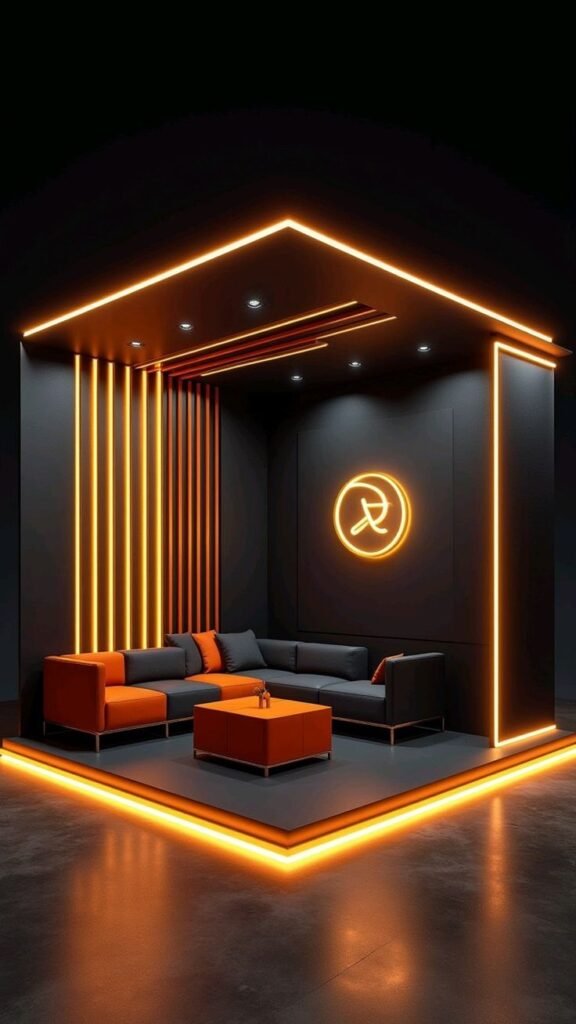
- Color and light: A company ‘s color palette is important, but lighting plays a crucial role. A dark or poorly lit booth will always be at a disadvantage compared to the competition. Invest in booth lighting, neon accents, and illuminated signs.
- Space and logic: Avoid placing unnecessary tables and boxes on your stand. Visitors need space to enter comfortably.
- Zoning (if space allows):
- Reception area (the reception is at the very back).
- Display area (a place where you can touch or test the product).
- Social space (a table behind the counter to carry out transactions in silence).
4. Errors leading to budget waste
- The warehouse is visible to all visitors. Clothing, shopping bags, and boxes of promotional material will be on display. Therefore, it is essential to provide a discreet backstage area!
- Ambiguous Call to Action (CTA): The customer knows your company is excellent, but what should they do? Request a demo? A free sample? Download a catalog via a QR code? Place a clear and visible call to action.
- Unused personnel: Salespeople often have their eyes glued to their phones or just stand there with blank expressions. A sales booth only comes alive when the team is engaged and open to interaction.
5. Preparation checklist (Keep for later!)
- Please clearly state the purpose of your participation in this event. (How many potential clients do you want to attract and what type of partners?)
- Book an attractive location — The closer the establishment is to the main entrance or major transport routes, the greater the flow of customers and the higher the profits.
- Approve the graphic and architectural design. taking into account the company’s style and ergonomics.
- Plan your approach to collecting contact information. (Offer an interactive solution or a practical guide instead of the traditional business card holder.)
- Form the team in the area of communication scenarios and behaviors on the exhibition stand.
- Plan your activities after the show (follow-up activities). — All persons to be contacted must be contacted within 48 hours of the event.
If you would like to participate in the exhibition, we can design and set up a stand for you. Please visit our website.. Contact and write to us